

For the better part of a century, automotive safety was almost entirely reactive. Engineers designed heavier steel cages, reinforced crumple zones, layered cabin airbags, and engineered safety belts that clamped down only after impact forces were already in motion. These structural defenses have saved millions of lives, yet they all share a fundamental limitation: they accept the violent physical reality of a collision and merely attempt to soften the blow.
The contemporary era of vehicle design has fundamentally inverted that philosophy. Today, the focus of vehicle safety has shifted from surviving an accident to preventing it altogether.
Advanced Driver Assistance Systems, widely known as ADAS, represent the vanguard of this active safety revolution. By integrating high-resolution digital cameras, millimeter-wave radar, ultrasonic proximity sensors, and powerful microprocessors, these systems function as an attentive electronic co-pilot. They quietly monitor the roadway, anticipate hazards long before the human eye registers them, and intervene with split-second precision when driver attention falters.
The Sensory Foundation: How Vehicles Perceive the Road
To understand how modern driver assistance works, one must look at how vehicles gather environmental data. A human driver relies primarily on visual perception, which is inherently vulnerable to blind spots, fatigue, sudden glare, and divided attention. A vehicle equipped with ADAS, by contrast, observes the environment through a coordinated multi-sensor network operating in continuous synchronization.
This architectural integration is known as sensor fusion. Rather than relying on a single detection tool, the vehicle synthesizes input from several distinct hardware components:
-
Optical Cameras: Mounted behind the upper windshield and around the exterior perimeter, these cameras read painted pavement markings, recognize posted speed limit signs, spot pedestrians stepping off curbs, and assess vehicle silhouettes.
-
Millimeter-Wave Radar: Positioned inside the front grille and rear bumper corners, radar emits radio waves that bounce off metallic and solid objects. Unlike cameras, radar can penetrate heavy rain, dense coastal fog, and blinding afternoon sun, calculating the precise speed and distance of approaching traffic with unerring accuracy.
-
Ultrasonic Sensors: Integrated into the front and rear fascias, these short-range acoustic sensors map immediate low-speed surroundings, detecting curbs, concrete bollards, and low obstacles during parking maneuvers.
By running this continuous stream of sensory data through predictive software algorithms, the vehicle’s central processing unit builds a dynamic three-dimensional model of the driving corridor hundreds of times per second.
High-Impact Active Intervention Systems
Driver assistance features fall into two distinct categories: passive warnings that alert the driver, and active interventions that physically manipulate the throttle, steering column, or braking system to avert disaster. The active systems deliver the most dramatic reductions in severe highway crashes.
Automatic Emergency Braking and Forward Collision Warning
Rear-end collisions account for a staggering percentage of everyday traffic accidents. They frequently occur during sudden stop-and-go highway slowdowns or when a driver glances away from the windshield to adjust climate controls or glance at navigation directions.
Forward Collision Warning (FCW) systems monitor the closing distance between your bumper and the vehicle ahead. If that distance closes too rapidly without driver deceleration, the system issues an escalating sequence of warnings: flashing dashboard graphics, piercing audible chimes, and haptic vibrations pulsed through the steering rim or seat cushion.
If the driver fails to react within fractions of a second, Automatic Emergency Braking (AEB) takes command. The system engages the antilock brake module, applying maximum stopping pressure even before the driver’s foot touches the pedal. Modern iterations also feature Pedestrian and Cyclist Automatic Emergency Braking, which can detect smaller, irregular silhouettes cutting across suburban crosswalks or urban intersections, bringing the vehicle to an abrupt halt even in low-light environments where human night vision struggles.
Lane Keeping Assist and Road Departure Mitigation
A momentary lapse in concentration, a drowsy micro-sleep, or an unexpected patch of hydroplaning water can send a vehicle drifting across lane lines in seconds.
Passive Lane Departure Warning systems alert you to unindicated drifts, but active Lane Keeping Assist (LKA) takes the defense a step further. When the onboard optical system detects tires grazing a painted boundary line without an active turn signal, the vehicle uses electric power steering actuators to apply gentle counter-torque, nudging the car back toward the center of the travel lane.
More advanced iterations incorporate Road Departure Mitigation, which can identify unpaved grass shoulders, gravel berms, and concrete barriers. If the system calculates that the vehicle is about to roll off the roadway entirely, it can combine corrective steering inputs with selective brake pulses on individual wheels to stabilize the chassis and prevent rollover events.
Expanding Situational Awareness in Heavy Traffic
Driving on multi-lane interstates and navigating crowded parking lots places extreme demands on a driver’s situational awareness. Advanced driver assistance simplifies these high-stress scenarios by eliminating human blind spots and smoothing out erratic traffic patterns.
Blind Spot Detection and Rear Cross-Traffic Alert
Traditional side-view mirrors leave significant visual gaps over the driver’s left and right shoulders. Blind Spot Monitoring addresses this vulnerability using rear-quarter radar sensors that sweep adjacent lanes.
When a vehicle slips into your blind zone, an illuminated amber icon illuminates on the corresponding side mirror housing. If you activate your turn signal while an adjacent vehicle is present, the warning light blinks furiously alongside an urgent chime. In premier vehicle setups, active blind spot intervention will actively resist steering input if you attempt to merge directly into the side of an approaching vehicle.
Working in reverse, Rear Cross-Traffic Alert utilizes those same quarter-panel radar sweeps to protect you when backing out of tight parking slots or obscured residential driveways. The system senses cross-traffic approaching perpendicular to your bumper from dozens of feet away, alerting you to unseen oncoming cars, bicycles, or shopping carts before you pull into their path.
Adaptive Cruise Control with Stop-and-Go Capability
Traditional cruise control maintains an inflexible engine speed regardless of road conditions, requiring constant manual cancellation whenever traffic bunches up.
Adaptive Cruise Control (ACC) represents a major leap forward in both highway safety and driver fatigue reduction. Utilizing forward-facing radar and cameras, ACC locks onto the vehicle ahead, maintaining a user-defined trailing gap measured in car lengths or seconds. If the lead car slows to navigate a gentle curve, your vehicle decelerates smoothly in tandem; when traffic clears, your vehicle accelerates back to your designated ceiling speed.
Modern stop-and-go ACC systems can bring the vehicle to a complete standstill in heavy rush-hour traffic jams and resume acceleration automatically once movement resumes. By smoothing out erratic braking and acceleration cycles, these systems reduce driver fatigue on long journeys and prevent the frustrating accordion effect that breeds highway chain-reaction crashes.
Driver Monitoring Systems: Taming the Distraction Crisis
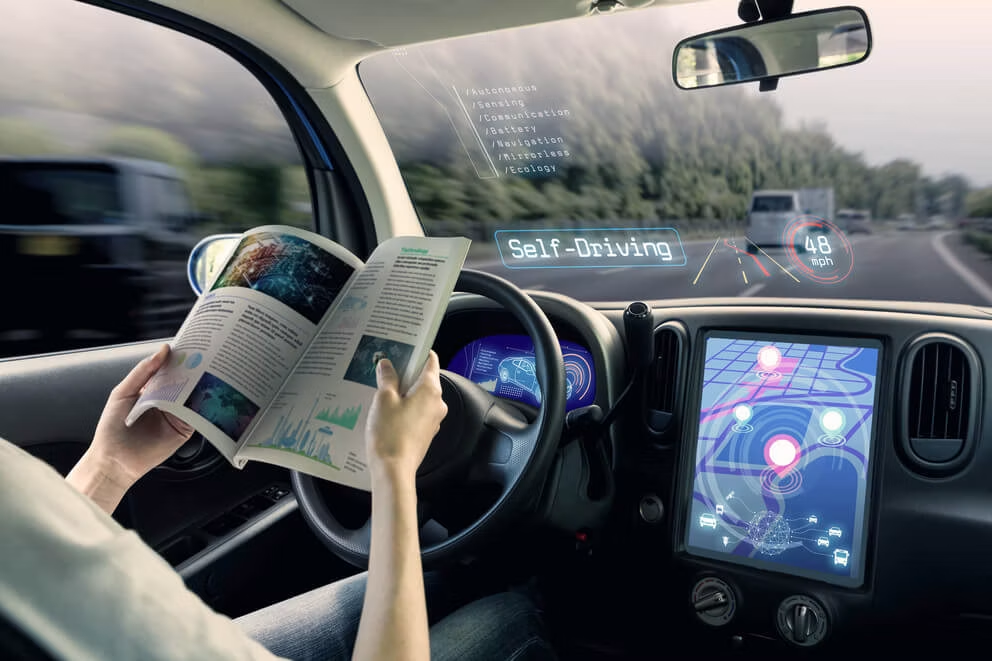
As vehicle cabins become increasingly computerized, the threat of driver distraction has surged. Advanced assistance features are designed to support human drivers, not replace them. When operators treat semi-automated driving functions as an invitation to check text messages, read documents, or fall asleep behind the wheel, safety drops precipitously.
To prevent automation complacency, automakers are deploying sophisticated Driver Monitoring Systems (DMS).
Infrared cameras mounted on the steering column or rearview mirror track facial orientation, head tilt, and blink duration. If the software determines that your gaze has drifted away from the forward roadway for more than a few seconds, or if heavy eyelid droop indicates impending sleep, the car initiates escalating alerts.
Simultaneously, steering wheels embedded with capacitive touch sensors detect whether hands are physically resting on the wheel. If a driver attempts to ignore warnings or becomes medically incapacitated, high-tier assistance systems can activate hazard lights, guide the vehicle to a safe stop within the travel shoulder, and automatically dial emergency dispatchers.
Navigating Real-World Environmental Limitations
While the engineering behind driver assistance systems is remarkably advanced, these tools remain dependent on physical physics and clean hardware surfaces.
Winter blizzards, wet road spray, and unpaved rural routes pose real challenges to optical sensors. A layer of road salt, wet slush, or caked mud over an emblem-mounted radar unit can temporarily blind the system, triggering dashboard warnings that forward collision protections are offline. Similarly, torrential downpours scatter laser and optical light, making it difficult for lane-tracking software to distinguish faded highway stripes from standing water reflections.
Vehicle owners must treat safety sensors with the same care they give mechanical components. Keeping windshields clean, clearing snow from exterior camera lenses, and ensuring that aftermarket modifications like lifted suspensions or custom bull bars do not disrupt factory sensor alignment are vital to keeping these life-saving technologies operational.
Advanced Driver Assistance Systems do not turn passenger cars into autonomous pods, nor do they eliminate the timeless necessity of attentive, defensive driving habits. What they provide is an indispensable safety net. By eliminating physical blind spots, counteracting fatigue, and stepping into the gap when milliseconds make the difference between a near-miss and a fatal impact, ADAS continues to set the benchmark for modern vehicular safety.
